
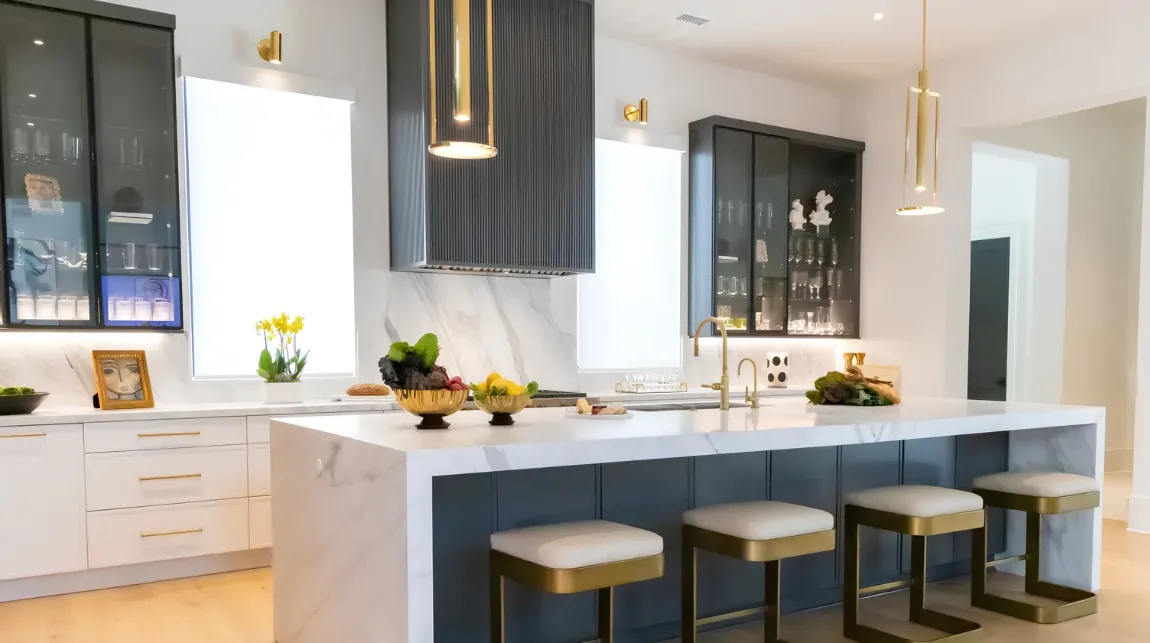
How to Match Cabinet Hardware to Faucets
The faucet is installed, the cabinets are set, and now every knob and pull you pick will either elevate the room or quietly undermine it. Learning how to match cabinet hardware to faucets is one of the most impactful decisions in a kitchen or bathroom remodel-and one of the easiest to get wrong. A coordinated finish story makes an Atlanta home feel intentional and luxurious, while a careless mismatch can make even premium fixtures look like afterthoughts.
This blog walks you through everything you need to know: understanding finishes and undertones, choosing between an exact match and a coordinated mix, factoring in style and layout, and why a showroom visit is the most reliable way to finalize your selections.
Key Takeaways
- You do not have to match cabinet hardware and faucets perfectly-but you do need to coordinate undertones and sheen so the room feels cohesive.
- Faucet finishes and cabinet hardware finishes differ by manufacturer, so never trust a finish name alone; always compare physical samples.
- Viewing finishes together in your actual home lighting-morning, afternoon, and evening-prevents mismatches that only appear after installation.
- Matching style (modern vs. traditional), scale, and shape matters just as much as matching the finish itself.
- Bring your faucet details, a photo of your space, and cabinet door samples into a local showroom to see hardware options side by side before committing.
Understanding Faucet and Hardware Finishes
A "finish" describes the surface coating or treatment applied to a faucet or piece of cabinet hardware-think polished chrome, satin nickel, or oil-rubbed bronze. It includes the metal or alloy underneath and the process used to treat the surface (polishing, brushing, plating, or leaving it raw). The reason two items with nearly identical labels can look completely different on your countertop is that finish names are not standardized across manufacturers.
Most faucet and hardware finishes fall into one of three families defined by undertone: cool/silver (chrome, polished nickel, brushed nickel), warm/gold (brass, champagne bronze, satin brass, antique brass), and dark/neutral (matte black, oil-rubbed bronze, aged bronze). Nearly every luxury kitchen or bathroom in Atlanta uses finishes from one or two of these groups. Understanding which family your faucet belongs to is the single most important first step when you shop for pulls, knobs, or any complementary hardware.
Because cabinet hardware often comes from a different manufacturer than your faucet, relying only on color words leads to visible mismatch after install. A "brushed nickel" faucet from one brand may read warmer or cooler than hardware labeled the same from another. Visual, side-by-side comparison is essential.
How to Read Finish Names and Undertones
The label on the box-"brushed nickel," "champagne bronze," "polished chrome"-is only a starting point. What matters more is the undertone and the sheen. Metal undertones influence pairing: warm tones should match warm tones, and cool with cool.
To identify an undertone by eye, hold the faucet or hardware sample next to a white sheet of paper or a white cabinet door. If the metal leans yellow, amber, or red, it's warm. If it leans blue or gray, it's cool. If it sits cleanly between, it's neutral.
For example, a champagne bronze faucet has a warm undertone and works best with satin brass or brushed gold hardware. A cool chrome faucet, on the other hand, pairs most naturally with silvery nickel hardware or matte black pulls for gentle contrast. Knowing how to choose cabinet hardware for kitchen cabinets can make it easier to narrow down options that complement your faucet and overall kitchen design.
Step-by-Step: How to Match Cabinet Hardware to Your Faucet
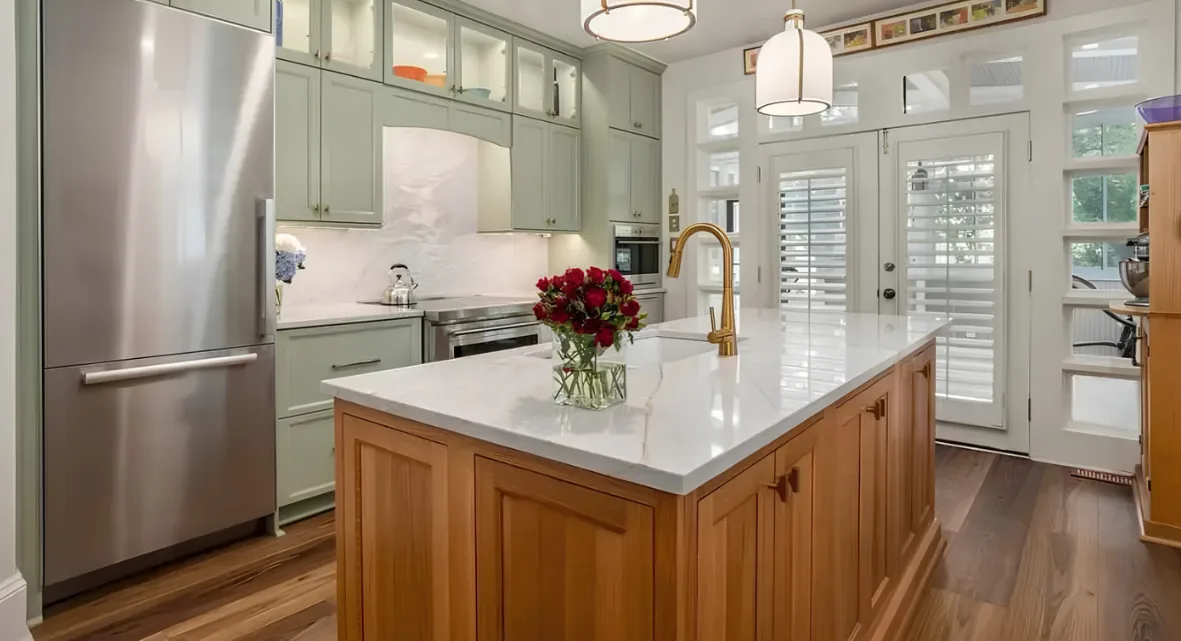
Below is a clear sequence that any homeowner or designer can follow before placing orders. Each step builds on the last, keeping the process manageable even for a whole-home remodel.
Step 1: Lock in Your Faucet Finish First
Choosing the faucet first can be an effective way to anchor a design. The faucet sits near the sink, pairs directly with the countertop and backsplash, and is usually a focal point in both kitchens and bathrooms. It's also harder and more expensive to swap than a set of cabinet pulls.
Confirm the exact faucet finish name, its family (cool silver, warm gold, or dark/neutral), and its sheen before looking at cabinet hardware. Let fixed elements in the room-your faucet, appliances, and countertop-guide the choice of hardware finishes. Take clear photos of the installed faucet or showroom sample from multiple angles and under both natural and artificial light. These photos become your reference for every hardware decision that follows.
Step 2: Choose Your Matching Strategy (Exact Match vs. Coordinated Mix)
There are two main strategies, and both work beautifully in luxury projects:
- Exact match: Hardware closely mirrors the faucet's finish family and sheen for a calm, unified look. Exact matches are easier than coordinated mixes in design and are especially popular in streamlined new builds where visual unity is the goal.
- Coordinated mix: You stay within the same undertone family but allow variations-for example, pairing a soft brushed faucet with slightly warmer or darker hardware to add dimension. Exact matches are easiest; coordinated mixes add visual interest when handled with intention.
Whichever strategy you pick, commit to it and repeat it consistently across the room. Use dominant and accent finishes to create visual contrast-establish a focal point by letting one element be the star, whether that's the faucet or a statement set of brass knobs on an island.
Step 3: Narrow Finishes by Undertone and Sheen
Shared undertone is key for coordinating finishes successfully. Evaluate your faucet's undertone first, then rule out any hardware finishes that clearly fight it. Keep your finishes in the same temperature family, and never mix different undertone families unless intentionally designing a high-contrast theme.
Practical pairings to consider:
- Cool chrome or polished nickel faucet: satin nickel or brushed nickel hardware, or matte black pulls for gentle contrast.
- Warm champagne bronze or soft gold faucet: satin brass, brushed gold, or antique brass hardware.
- Matte black faucet: matching matte black hardware or very dark bronze pulls.
Coordinate finishes intentionally by matching similar sheens or textures. The sheen of finishes significantly affects their coordination; matte and polished finishes require careful matching. Keep sheen levels similar unless you're deliberately layering textures for a reason-a polished faucet next to matte hardware can feel unresolved if the contrast isn't echoed elsewhere.
Order 2–3 finish samples within your undertone family before buying. Free samples help avoid finish regret after installation, and comparing them physically is the only reliable way to confirm a match.
Step 4: Check Style, Shape, and Scale
Even perfectly matched finishes can look wrong if the hardware style clashes with the faucet. Coordinate styles and shapes between cabinet hardware and faucets for consistency:
- Curved, traditional faucets pair well with rounded knobs, cup pulls, or gently arched handles. Pair vintage faucets with classic hardware styles for a cohesive look.
- Angular, contemporary faucets work best with square pulls, linear bar pulls, or tab handles.
Scale matters too. Large drawers need long pulls; small doors need knobs or shorter pulls. Hardware that projects too far from the cabinet face can catch clothing or cast shadows-something to consider when your cabinets vary in depth. In open-concept homes, hardware and faucet style should also coordinate with nearby light fixtures and appliances for a continuous look across connected spaces.
Step 5: Test Finishes in Real Lighting
Finish appearance changes dramatically with room lighting. Atlanta homes often see strong afternoon sun through south-facing windows, plus warm pendant or recessed lighting in the evening. A finish that looks perfect under bright showroom lights can read entirely differently under your kitchen's under-cabinet LEDs.
Test samples under different lighting conditions for accuracy. Bring home hardware samples or sample boards and tape them temporarily to cabinet fronts near the faucet area. Check the combination in morning natural light, afternoon light, and under evening recessed or pendant lighting. Physical samples of hardware and finishes should be compared in the actual room lighting-not just in the store.
Photograph each sample comparison for reference. The camera sometimes catches subtle clashes-a slightly yellow pull next to a cooler faucet, for instance-that the eye misses in the moment.
Design Tips for Kitchens vs. Bathrooms
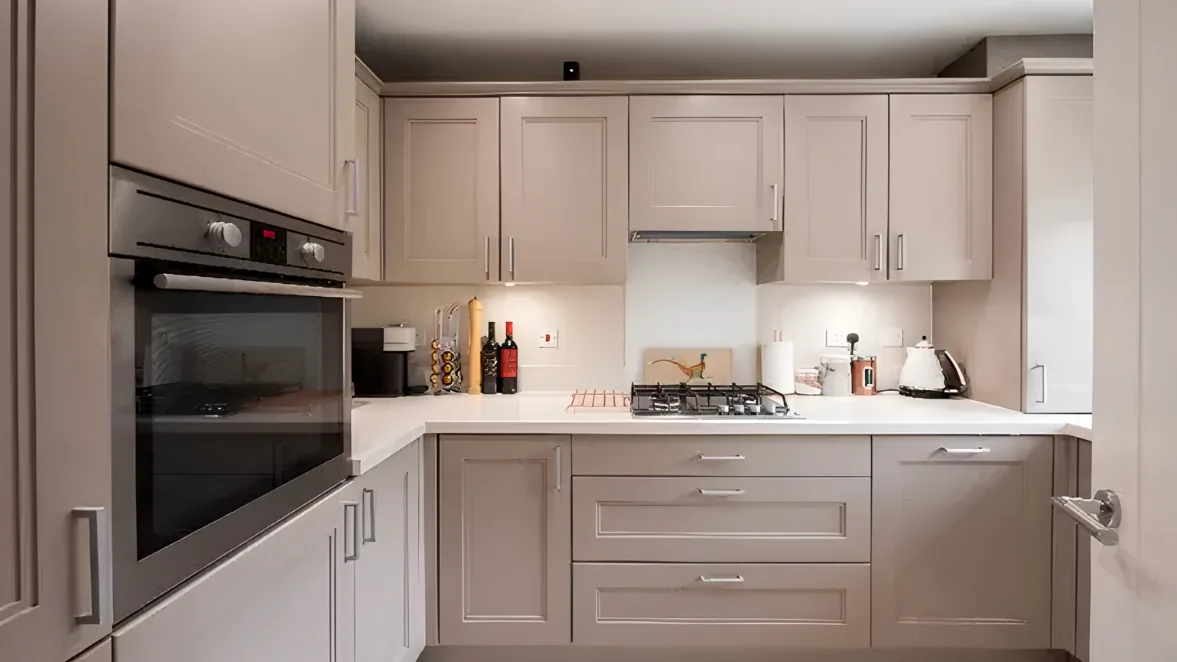
The same matching principles apply throughout your home, but kitchens and bathrooms have different focal points, sightlines, and storage layouts that affect how you apply them.
Matching Hardware to Kitchen Faucets
In the kitchen, the faucet often shares sightlines with cabinet hardware, the main sink, and nearby appliances. Use the primary kitchen faucet as your main reference point, then echo that finish on perimeter cabinet hardware and any secondary fixtures like a pot filler.
Think about how stainless or panel-ready appliances feel next to your chosen metals. If your appliances read cool and your faucet is warm-say, a champagne bronze next to stainless-bridging the two with hardware in satin brass and repeating warm tones in your light fixtures or countertop veining keeps things from feeling disjointed. If mixing metals, repeat each finish at least twice in the space so every element feels intentional rather than accidental.
For inspiration on how to choose cabinet hardware that works with your kitchen layout, exploring curated collections before your showroom visit can save time.
Matching Hardware to Bathroom Faucets
In bathrooms, faucets, cabinet hardware, shower trim, and accessories like towel bars and hooks often sit very close together-making coordination far more noticeable. Less forgiving spaces, like bathrooms, benefit from carefully mixing at most two finishes.
Choose a primary finish based on the vanity faucet, then repeat it on vanity knobs and pulls, towel bars, paper holders, and robe hooks. If your shower fixtures and tub fillers are visible from the vanity, they should share the same finish family. For double-vanity setups common in Atlanta homes, use consistent hardware across both sinks even if mirrors or light fixtures differ slightly.
Powder rooms can be a place to introduce a bolder finish or more decorative hardware-think antique brass knobs or a statement faucet from a curated collection-while still coordinating with the overall finish story of your home. Use a maximum of two or three metal finishes in one room to keep the design grounded. Continuing that discipline across connected spaces, like a primary bath and adjacent closet, reinforces the sense of luxury. A complete bathroom fixtures checklist can help you track every element that needs to coordinate.
Bringing It All Together with a Showroom Visit
Seeing faucet and hardware options together in person removes the guesswork that email swatches and online photos can never fully resolve. A luxury kitchen and bath showroom in Atlanta simplifies the process by displaying working faucets, cabinet vignettes, and hardware boards side by side-under lighting conditions similar to what you'll find in a Georgia home.
When you visit, bring:
- Photos or specs of your selected faucet.
- A cabinet door sample or finish chip.
- Countertop and tile samples, if available.
- Room photos showing your lighting and nearby spaces.
Design consultants can guide you through curated finish combinations, demonstrate how different metals interact with natural and artificial light, and help you finalize a cohesive package. Thanks to collections from brands like Rocky Mountain Hardware, Classic Brass, and Emtek, you can find pulls, knobs, and accessories that share both the finish and the design language of your faucet.
If you're in the planning phase of a new build or whole-home remodel, virtual consultations and digital spec tools can help you narrow your options before an in-person visit.
Wrapping Up
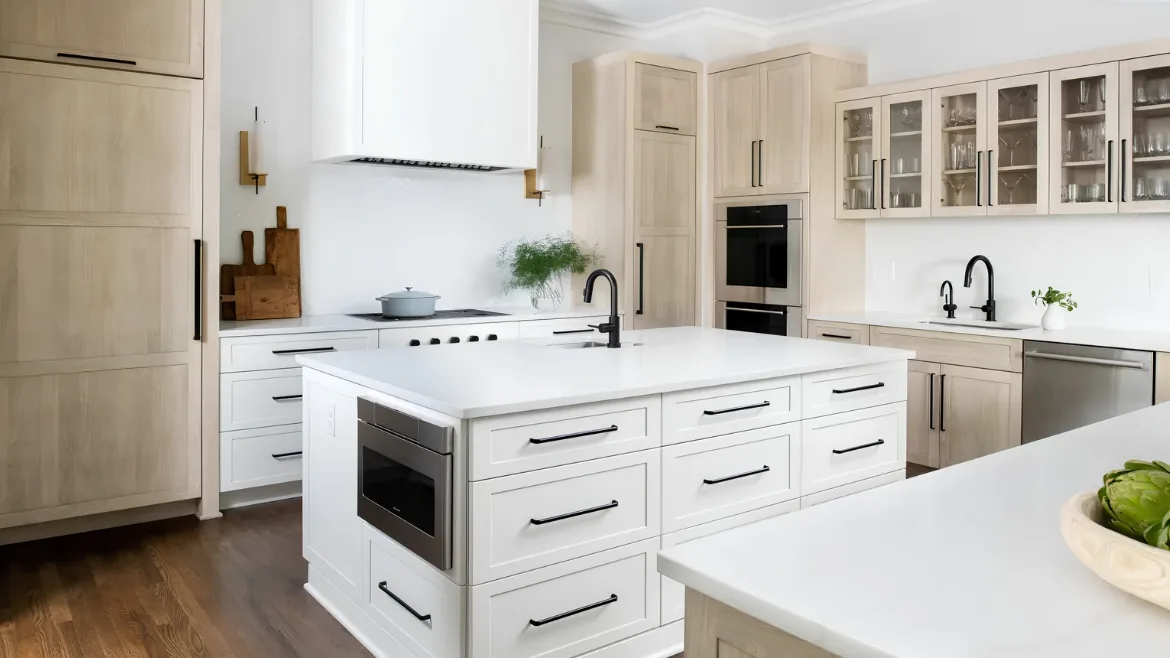
Matching cabinet hardware to faucets is about creating a balanced, intentional look rather than making every finish identical. Considering undertones, sheen, style, proportion, and surrounding materials helps hardware and faucets complement one another naturally. Thoughtful coordination can make the entire kitchen or bathroom feel polished, cohesive, and visually connected from one detail to another.
European Kitchen & BathWorks offers cabinet hardware in Atlanta to help homeowners, designers, builders, and remodelers coordinate finishes with confidence. Our showroom also features custom cabinetry, designer lighting, TOTO toilet products, kitchen fixtures, and bath products for complete spaces. Contact us to compare options and select complementary details that bring your overall design together.
Frequently Asked Questions
Does cabinet hardware have to match my faucet exactly?
No. Exact matches are not required-the key is to stay within a compatible undertone and finish family so the room feels coordinated rather than cluttered. Many designers intentionally mix metals subtly for more depth, keeping one finish clearly in the lead as the dominant tone. Cabinet hardware and faucets should share a coordinated finish family or design style, even when they aren't identical.
Can I mix black hardware with a gold or brass faucet?
Yes. Matte black hardware can frame warm faucets beautifully when repeated consistently on pulls, hinges, and possibly light fixtures. The key is intention: if mixing metals, repeat each finish at least twice in the space. Test the combination with your specific cabinet color and countertop before committing to confirm the contrast feels deliberate, not accidental.
How do I match hardware to a brushed nickel or chrome faucet?
Cool-toned faucets like brushed nickel or polished chrome pair best with other cool metals-satin nickel or stainless-toned finishes-or with matte black accents for contrast. Bringing a photo or faucet sample into a showroom to compare pull boards directly under similar lighting is the most reliable way to find the right match.
Should I use the same hardware and faucet finish in every room?
Many Atlanta homes benefit from a shared finish story, especially in connected spaces like a kitchen that opens to a dining area or hallway powder room. However, secondary bathrooms or powder rooms can showcase a different yet related finish. Using one or two core finish families throughout the home creates harmony, then adding variation through shapes and textures keeps individual rooms feeling distinct.
When in my remodel should I choose cabinet hardware to match my faucet?
Finalize the faucet and major fixtures first, then confirm cabinet finishes and countertops, and select hardware last. This sequence works because the faucet is the hardest element to change and sets the tone for everything around it. Visiting a showroom once the faucet and cabinet finishes are chosen allows for confident hardware decisions well before installation day.

Chris Brennan is the Owner and Founder of European Kitchen & BathWorks, a luxury kitchen and bath showroom serving the Atlanta area. Since founding the company in 2005, Chris has helped homeowners, architects, interior designers, builders, and remodelers select premium European and luxury kitchen, bath, lighting, and hardware products. With more than 20 years of industry experience, he shares practical insights on product selection, design trends, and creating functional, high-end living spaces through experience-based guidance.