
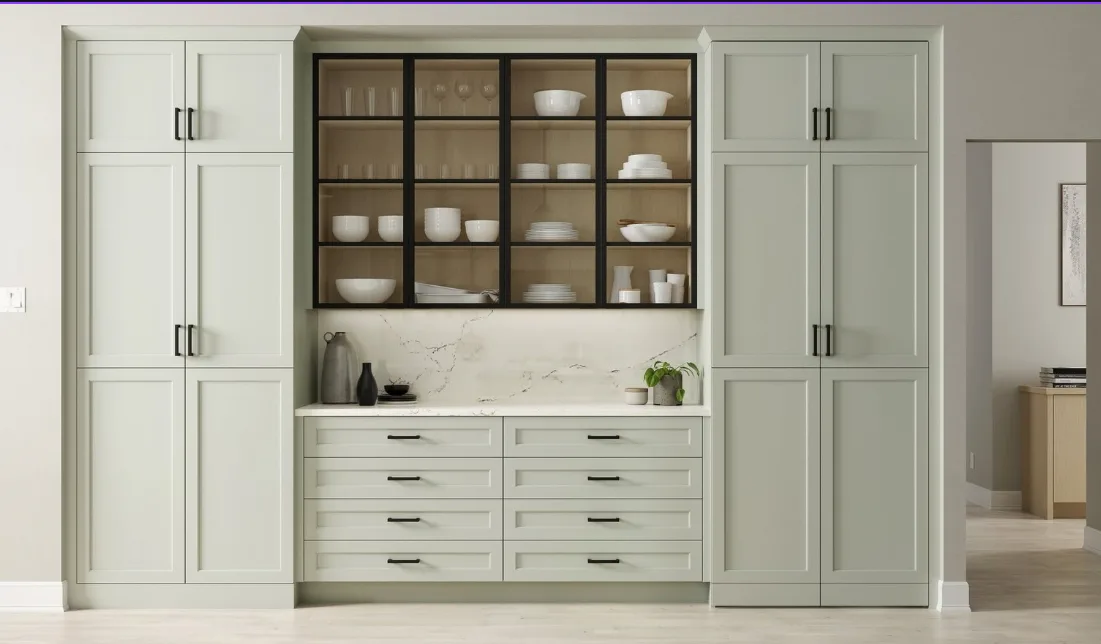
How to Choose Cabinet Hardware for Kitchen Cabinets
Choosing the right cabinet hardware can transform a kitchen's aesthetic more dramatically than almost any other single design decision. Think of kitchen cabinet hardware as jewelry for your cabinetry - small details that carry enormous visual weight, shaping how an entire room feels the moment you walk in. With so many options available in finishes, shapes, and styles, knowing how to choose cabinet hardware that balances beauty and functionality is the key to a kitchen that looks and works its best.
This blog walks you through everything you need to know about picking the right knobs and pulls for your kitchen - from understanding hardware types and proper sizing to selecting finishes that complement your fixtures and appliances. Whether you're building a new kitchen or refreshing existing cabinet doors, these principles will help you make confident, lasting decisions.
Key Takeaways
- Match hardware type to function: knobs are ideal for cabinet doors and small drawers, while pulls are better for larger drawers and heavy cabinet doors.
- Use the Rule of Thirds: pulls should be approximately one-third of drawer width for visual harmony.
- Quality materials matter: durable materials like solid brass and stainless steel are ideal for kitchen fixtures that see daily use.
- Coordinate finishes with your faucet, lighting, and appliances for a cohesive kitchen style.
- Consistent hardware placement across all cabinetry creates a professional, polished appearance.
Understanding Cabinet Hardware Types
Before diving into finishes and aesthetics, it helps to understand the functional differences between the main hardware types. Cabinet knobs, cabinet pulls, and specialty hardware each serve different purposes, and choosing the right hardware type for each application makes your kitchen more comfortable to use every day.
The most common approach is to use knobs on doors and pulls on drawers, but mixing knobs and pulls strategically can add visual rhythm to your kitchen design. Some homeowners prefer pulls exclusively for a streamlined, modern look, while others favor knobs for their classic simplicity. Ultimately, personal preference plays a role, but function should always guide your decision. Understanding the different hardware options, finishes, and placement considerations can make it easier to choose the right cabinet hardware for your kitchen.
Cabinet hardware should match the overall style and decor of the kitchen. A traditional kitchen with raised-panel doors calls for different hardware than a contemporary kitchen with flat slab fronts. Understanding what each type offers helps you build a cohesive plan.
Knobs: Classic Simplicity for Cabinet Doors
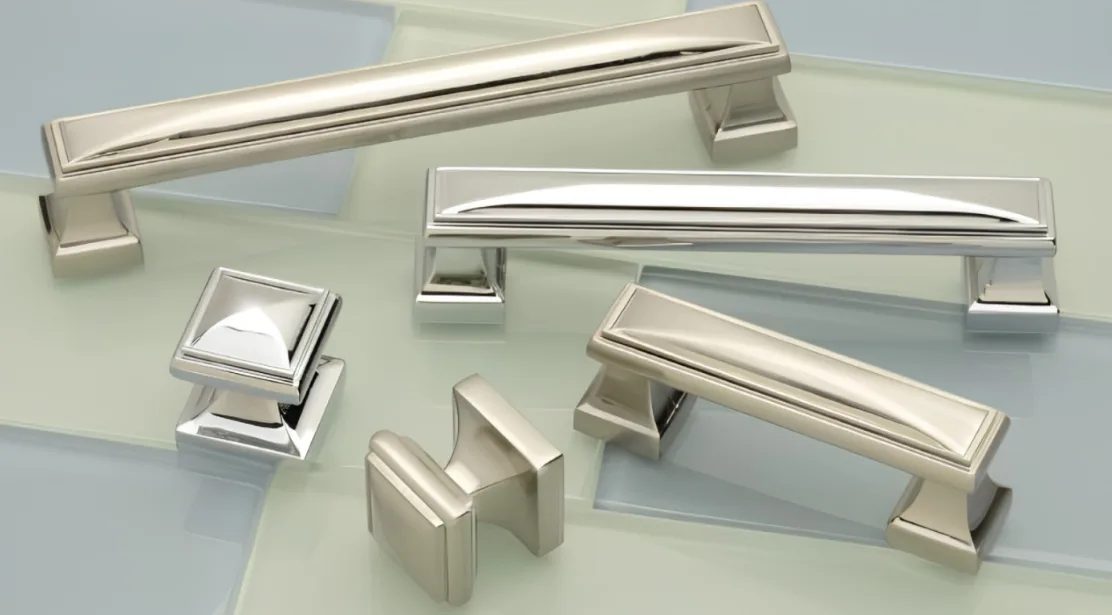
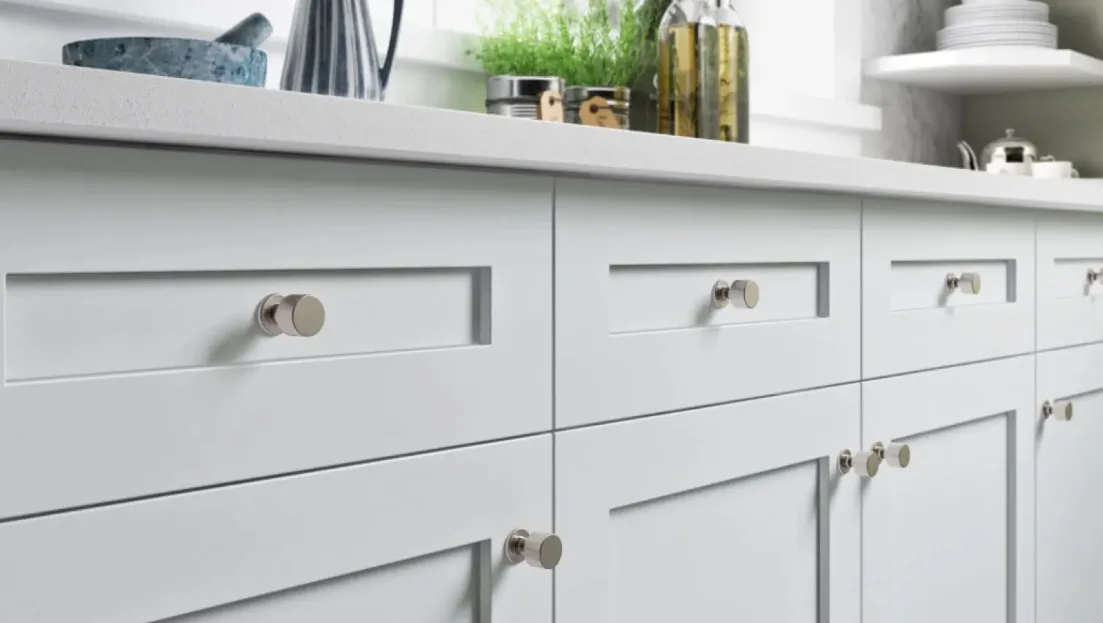
Knobs are single-point mounts, requiring just one hole to install. This clean, minimal footprint makes them an easy thing to work with during installation and an elegant choice for cabinet doors throughout the kitchen. Knobs are ideal for cabinet doors and small drawers where you don't need significant leverage to open them.
Ergonomic design is crucial for the usability of cabinet hardware, and knobs excel on lightweight doors - upper cabinets, bathroom vanity doors, and even laundry room cabinetry. Their compact profile keeps sightlines clean, especially on narrower door styles where a long pull might overwhelm the proportions. For very wide doors, some designers place two knobs symmetrically rather than a single pull, creating a balanced, traditional detail.
Pulls: Superior Grip for Drawers and Large Cabinets
Choose pulls for heavier drawers and knobs for lighter cabinet doors - that simple guideline solves most hardware decisions. Pulls use a two-point mount, which distributes force and provides superior leverage. This makes them the practical choice for heavy drawers, deep pantry doors, and larger doors where a firm grip matters.
The variety within pulls is wide. Sleek bar pulls deliver clean lines suited to modern and contemporary kitchens. Cup pulls and bin pulls offer a rustic charm for traditional style drawers, evoking a farmhouse or craftsman aesthetic. Edge pulls provide a minimalistic look for modern cabinetry - nearly invisible, they let the cabinetry itself take center stage. And latches are best for cabinets that require security and infrequent access, such as a liquor cabinet or utility storage.
Pulls are better for larger drawers and heavy cabinet doors because you can wrap your fingers around them and pull with ease. In task-heavy zones - think the main prep area near your sink or cooktop - pulls improve everyday functionality significantly.
Sizing and Placement Guidelines
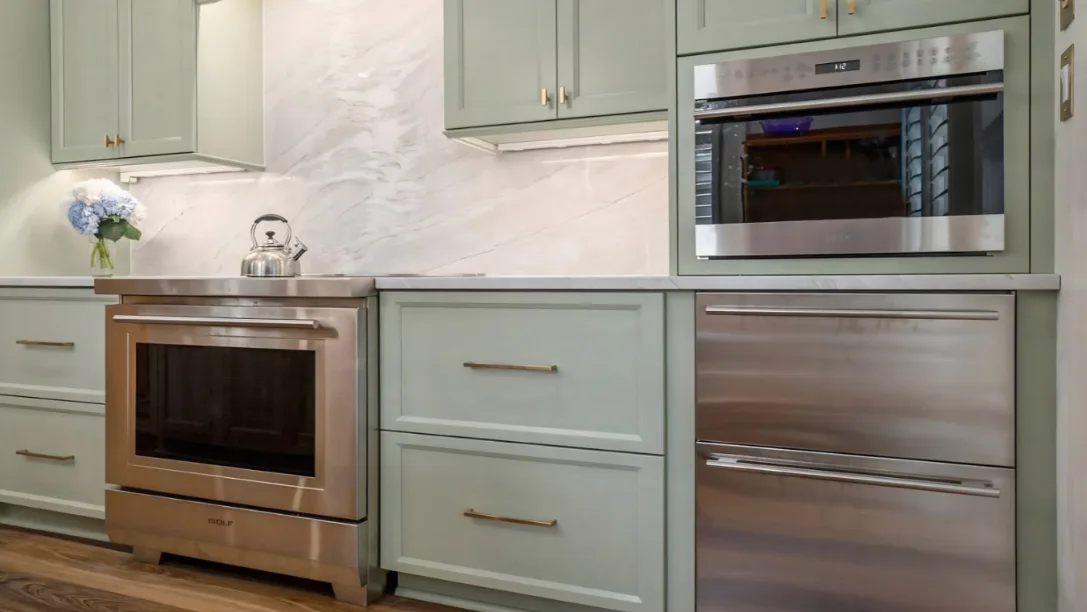
Getting hardware proportions right is just as important as choosing the right style. Hardware proportions must align with cabinet sizes for visual harmony, and there's a reliable framework to guide you. A good rule of thumb: use pulls that are one-third of the drawer width. This "Rule of Thirds" keeps everything looking balanced and intentional.
For smaller drawers, a shorter pull length works well. Medium drawers benefit from slightly longer pulls, while larger drawers call for pulls that span a more generous portion of the total width. For drawers over a certain size, consider using two centered pulls rather than one oversized pull - this distributes visual weight and makes operation more comfortable.
When it comes to hardware placement for knobs, mount knobs within a few inches of cabinet edges - typically on the stile opposite the hinges. On upper cabinets, knobs usually sit near the bottom corner of the door for easy reach. On lower cabinets, they're placed near the top edge. Consistency is the goal: every knob and pull at the same height and position across matching cabinetry.
Use templates for consistent hardware placement. A simple drilling jig or cardboard template ensures that every hole lines up perfectly. Once you drill holes in your cabinet faces, there's no going back, so taking time to measure and template is a safe choice that prevents costly mistakes.
Place pulls at the top or center of drawers, depending on the drawer height and your kitchen style. Centered placement is common on taller drawer fronts, while top-mounted pulls on shorter drawers create a clean, uniform line across a run of cabinetry.
Selecting Finishes and Styles for Your Kitchen
Hardware finish may be the single most impactful aesthetic decision in your hardware selection. The right finish ties your cabinetry to your faucet, lighting pendants, and appliances - creating a space that feels intentional from every angle. Hardware should complement appliances and lighting for a cohesive aesthetic.
Brass and gold finishes are popular in modern kitchens, bringing warmth and sophistication to both painted and natural wood cabinetry. Antique brass is a common choice for rustic settings, while unlacquered brass develops a unique patina over time - a living finish that appeals to homeowners who appreciate character and craftsmanship.
Polished nickel has a warmer tone than chrome finishes, making it a versatile option that bridges traditional and modern kitchens. Chrome delivers a cooler, more contemporary edge - particularly effective when coordinated with stainless steel appliances. Both are easy to maintain in high-use kitchens.
Black cabinet hardware made a strong statement in recent years, though black hardware is less popular than in previous years. It still works beautifully as a bold contrast against white kitchen cabinets or light-painted surfaces, but many designers are now gravitating toward brass, bronze, and mixed-metal approaches.
When it comes to mixing metals, the approach requires intention but rewards you with a curated look. Mixing metals in hardware creates a layered, designed feel - use warm and cool metals together for balance. Coordinate metals by using each at least twice in a space. For example, if your faucet is brass, echo that finish in your cabinet pulls, and let your lighting or appliance hardware carry a second metal. Brass and silver can be effectively mixed in kitchens when you maintain this kind of deliberate repetition. However, avoid mixing different finishes on the same hardware type - keep all your cabinet knobs in one finish and your pulls in the same or a complementary one to maintain order.
Style also matters at the macro level. A minimalist kitchen design with slab doors favors edge pulls or slim bar pulls that maintain the room's unbroken lines. A traditional kitchen with Shaker or inset doors might call for classic knobs paired with bin pulls on drawers. Transitional kitchens often use simple profiles in warm finishes to bridge modern functionality with timeless detail. Ergonomic design is crucial for the usability of cabinet hardware no matter the style, so always hold a pull or knob in your hand before committing.
Complete Your Kitchen With the Right Hardware
Choosing the right cabinet hardware can bring your kitchen design together while improving everyday functionality. Consider your cabinet style, finish, size, and how the hardware feels in your hand. By balancing appearance with comfort and practicality, you can select pieces that complement your cabinets and create a cohesive, polished kitchen.
European Kitchen & BathWorks can help you find the right cabinet hardware in Atlanta to complement your kitchen's style and functionality. Our offerings include cabinetry, lighting, and kitchen collections, so you can coordinate essential design elements with confidence. Visit us to explore your options and discover hardware that completes your kitchen vision.
Frequently Asked Questions
Can I mix knobs and pulls on my kitchen cabinets?
Absolutely. The most common and effective approach is to use cabinet knobs on doors and cabinet pulls on drawers. This pairing provides both visual interest and functional logic. Keep the finish consistent across both hardware types, and limit yourself to one or two complementary shapes for a cohesive result.
Does my hardware finish have to exactly match my faucet and lighting?
Not exactly, but they should share a common undertone. Warm metals like brass and gold coordinate naturally, just as cooler finishes like chrome and polished nickel work well together. The key is repetition - use each metal in at least two places in the space so that nothing feels accidental or out of place.
How do I choose the right pull size for wide drawers?
Follow the Rule of Thirds: select a pull length that's roughly one-third of the drawer width. For especially wide drawers, you can use two centered pulls placed symmetrically rather than a single oversized pull. This approach keeps the hardware proportional and the drawer easy to operate.
Is black hardware still a good choice?
Black hardware is less popular than in previous years, but it remains a striking option - particularly as a contrast against light or painted cabinetry. If it fits your kitchen style and you're drawn to it, it's still a valid choice. Just be sure to coordinate it with other dark accents in the room so it doesn't feel isolated.
What's the difference between unlacquered brass and antique brass?
Unlacquered brass is a living finish - it develops a unique patina over time as it reacts to oils and air, giving it an evolving, one-of-a-kind character. Antique brass, by contrast, is a lacquered or treated finish designed to mimic an aged appearance while remaining stable. Both bring warm tones to a kitchen, but they appeal to different preferences regarding maintenance and aesthetic evolution.
How do I ensure consistent hardware placement across all my cabinets?
Use templates for consistent hardware placement. A simple jig - whether store-bought or made from cardboard - ensures every hole is drilled at the same position on every door and drawer front. Mark your desired placement on the template once, then replicate it across all cabinetry before you drill holes. This small investment in preparation delivers a polished, professional result throughout the entire kitchen.

Chris Brennan is the Owner and Founder of European Kitchen & BathWorks, a luxury kitchen and bath showroom serving the Atlanta area. Since founding the company in 2005, Chris has helped homeowners, architects, interior designers, builders, and remodelers select premium European and luxury kitchen, bath, lighting, and hardware products. With more than 20 years of industry experience, he shares practical insights on product selection, design trends, and creating functional, high-end living spaces through experience-based guidance.