
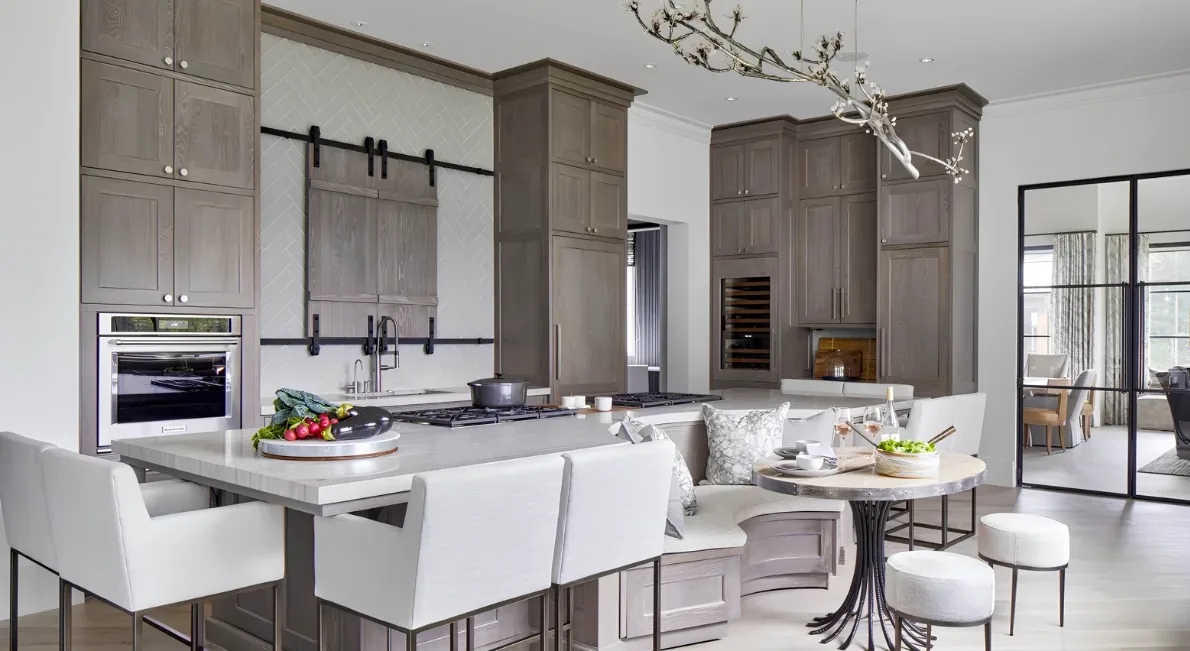
Shaker, Slab, or Inset: A Guide to Custom Cabinet Door Styles
You're standing in your Atlanta kitchen, inspiration photos saved on your phone, and one question keeps surfacing: should you go with Shaker, slab, or inset cabinet doors? Choosing the right cabinet door style shapes the entire room-from how light plays across surfaces in the morning to how the space feels when you're cooking on a weeknight. This blog on custom cabinet door styles breaks down what each option looks like, how it performs in a real Georgia kitchen, and how to decide which one fits your home and lifestyle.
All of the guidance here comes from hands-on experience specifying custom cabinetry for kitchens and baths across metro Atlanta, where architecture ranges from historic bungalows to contemporary new builds.
Key Takeaways
- Shaker doors feature a five-piece design with a flat center panel, offering timeless versatility that suits traditional, transitional, and even modern kitchens.
- Slab doors are completely flat with no raised or recessed details, delivering clean lines ideal for contemporary kitchens and minimalist spaces.
- Inset doors sit flush with the cabinet frame for a tailored, furniture-like look, but they require tighter tolerances and typically cost more than overlay styles.
- Classic Atlanta homes often pair best with Shaker or inset styles, while newer construction, lofts, and condos tend to lean toward slab or slim Shaker profiles.
- The door profile only tells part of the story-hardware, painted finishes, wood species, and appliances all need to work together for a cohesive kitchen design.
What Makes a Cabinet Door Style?
Before comparing Shaker, slab, and inset options, it helps to understand the basic elements that define any cabinet door. Two decisions drive everything: the door profile (what the face looks like) and the mounting method (how the door attaches to the cabinet box).
The main parts of a framed door are the frame-made of vertical stiles and horizontal rails-and the center panel that sits inside. Edge profiles along those joints can be square, beveled, or molded, and they influence shadow lines, cleaning ease, and visual weight.
Then there's how the door meets the cabinet face. Full overlay doors cover most of the face frame. Partial overlay leaves more frame visible. Inset doors sit inside the face frame and close flush, creating a visible reveal around every door and drawer. Each cabinet door style brings distinct aesthetic qualities to a kitchen or bathroom, and these structural choices affect not just aesthetics but how the kitchen feels to use every day-from wiping down surfaces to mounting hardware. Keeping those surfaces in good condition is an important part of protecting your investment, and this ultimate guide to custom cabinet maintenance covers practical ways to care for custom cabinetry.
Framed vs. Flat: Panel Construction Basics
Framed doors use a surrounding frame with a center panel-recessed, raised, or flat-to create dimension and detail. This construction naturally reads as more classic or transitional, offering visual depth through shadow lines where the panel meets the frame.
Slab doors, by contrast, are a single completely flat surface. There's no frame, no recessed panel, no raised panel. The beauty is in the uninterrupted plane of material-whether that's a smooth lacquer, a rich veneer, or a bold paint color.
In Atlanta, framed doors often suit traditional neighborhoods with crown moldings and hardwood flooring, while flat panel fronts complement contemporary in-town builds and open-plan condos.
Shaker Cabinet Doors: Timeless and Versatile
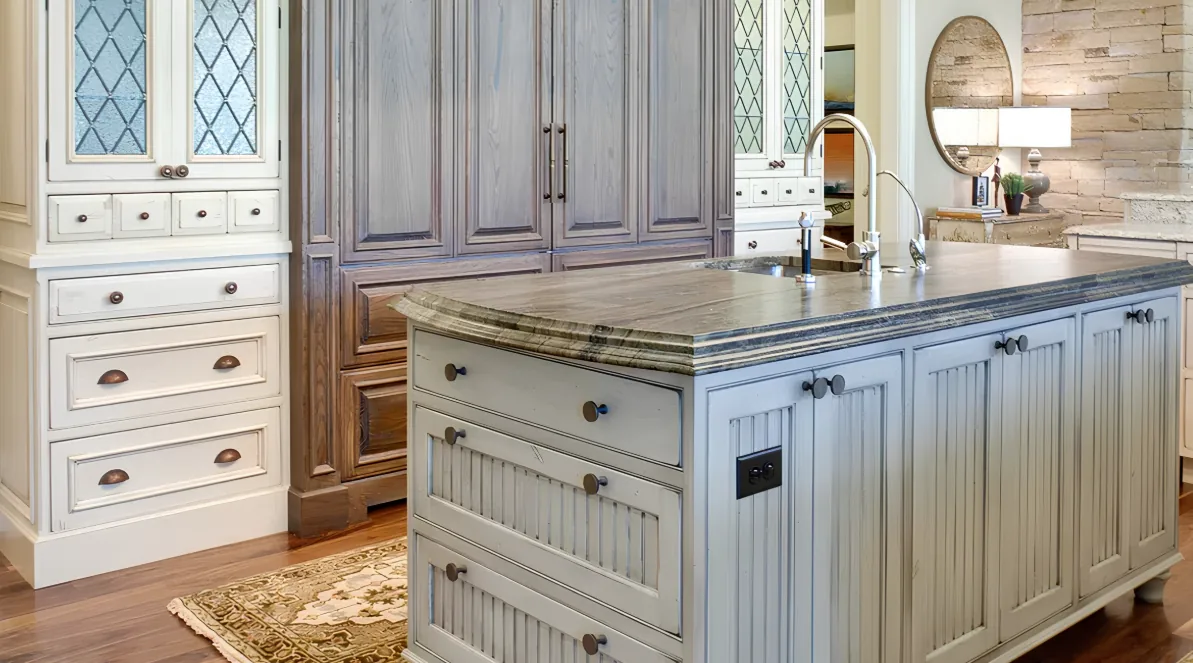
Shaker doors are one of the most enduring cabinet door profiles. Rooted in the craftsmanship of early American Shaker communities, they feature a five-piece design with a flat center panel and squared edges-no arches, no ornamental molding, no excess. Shaker cabinet doors feature a recessed center panel with a square frame, and that simplicity is exactly what gives them their timeless appeal.
Shaker doors are popular for their design versatility. A painted white Shaker reads as fresh and traditional. The same profile stained in white oak or walnut shifts toward modern warmth. Because the lines are clean but not stark, Shaker works in a wide range of Atlanta kitchens-from renovated bungalows in established neighborhoods to new suburban family homes. Shaker doors offer timeless versatility that few other door styles can match. For homeowners who want their cabinetry to feel more personal, details like finishes, hardware, colors, and unique design elements can create a space that reflects individual preferences. Exploring different ways of adding a personalized touch to custom cabinetry styles can help bring those individual preferences into the finished design.
Shaker doors typically sit as an overlay on top of the cabinet box face, though they can also be configured as inset for an even more refined, custom look. They're easy to personalize through paint colors, countertops, hardware, and lighting choices.
Design Ideas for Shaker Kitchens in Georgia Homes
Think of this as design direction rather than strict rules-Shaker's strength is how well it adapts.
- Classic Atlanta family kitchen: White or soft cream painted Shaker doors paired with warm brass knobs, marble-look countertops, and statement pendant lighting. The simplicity of the Shaker profile lets those hardware finishes become a true accent.
- Transitional warmth: Natural wood Shaker in a medium oak tone on lower cabinets, with painted uppers in a muted sage or warm gray. This approach bridges traditional and modern, suiting homes with mixed architectural elements.
- Contemporary twist: Deep-toned paint-think navy or charcoal-on Shaker doors with minimal bar pulls in matte black. The recessed panel catches subtle shadow lines that keep the design from feeling flat.
- Georgia stone pairing: Shaker doors complement the quartzite and marble countertops commonly chosen in Atlanta remodels, especially when frame proportions are kept moderate, and the finish is a soft satin sheen.
Slab Cabinet Doors: Clean, Modern, and Minimal
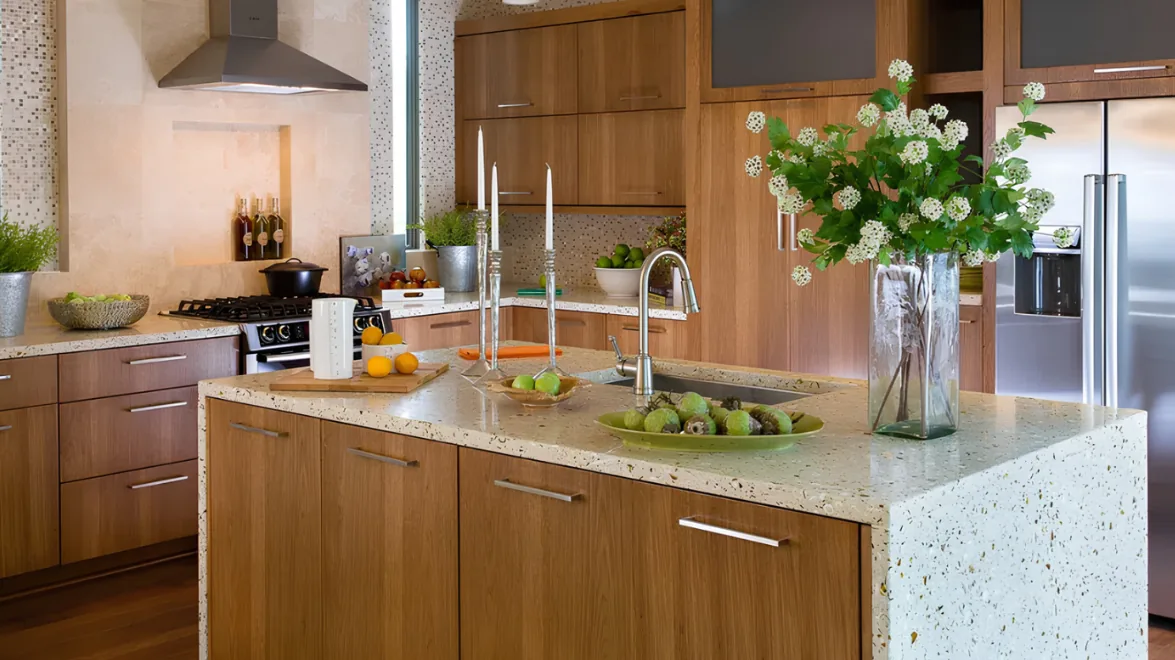
Slab doors are completely flat with no raised or recessed details-just a single smooth surface. Every element of the material is on display: the grain direction of a wood veneer, the depth of a lacquer color, the consistency of a painted finish. Slab doors are ideal for contemporary or minimalist designs where the goal is an uninterrupted, streamlined aesthetic.
That visual simplicity suits open-plan Atlanta homes, lofts, and modern townhomes that prioritize clean lines. Slab fronts can emphasize rich wood grain beautifully, or they can look striking in crisp painted finishes. Homeowners choosing slab often pair them with integrated appliances, modern vent hoods, and linear hardware to maintain the minimalist mood.
Slab doors are the easiest to clean due to their flat surface-no grooves, no panel recesses, no corners where grease accumulates. They also provide maximum interior clearance and accessibility because there's no frame protruding into the cabinet opening. However, that unbroken surface means every imperfection shows. Core flatness and material consistency matter enormously. In Atlanta's humid climate, engineered cores (medium-density fiberboard or balanced-back veneer over plywood) often outperform wide solid wood panels for slab construction, resisting warping and cupping over time.
How to Style Slab Doors for a Warm, Livable Kitchen
Some homeowners worry slab may feel too stark or cold. The key is to layer warmth through materials and texture rather than the door profile itself.
- Mix in warm wood tones: A stained wood slab island paired with painted slab perimeters adds material interest and keeps the space from feeling monochromatic.
- Texture through backsplash and flooring: A textured stone backsplash or patterned tile introduces visual depth that balances the flatness of slab fronts.
- Layered lighting: Under-cabinet lighting, pendant fixtures, and natural Atlanta daylight all interact differently with a flat surface, so plan lighting to complement the cabinet face.
- Hardware that preserves clean lines: Linear bar pulls, discreet edge pulls, or push-to-open mechanisms keep the streamlined aesthetic intact. Finger channels routed into the door edge eliminate visible hardware entirely.
Shaker vs. Slab vs. Inset: How They Compare
Many Atlanta homeowners narrow their style choices to these three options and need a clear, side-by-side comparison. Here's how they stack up:
- Visual style: Shaker reads as versatile-traditional, transitional, or modern depending on finish and hardware. Slab reads as modern, minimal, and streamlined. Inset amplifies whatever door profile you choose with precision and furniture-quality presence.
- Feel of the space: Shaker creates warmth through subtle shadow lines. Slab creates openness through uninterrupted surfaces. Inset creates a sense of craftsmanship and permanence.
- Design flexibility: Shaker allows variation through frame width, edge detail, paint vs. stain, and hardware. Slab depends heavily on material, grain, and finish since the profile is minimal. Inset adds another layer: reveal width, hinge style, and the interplay between door and frame.
- Home styles they complement: Shaker suits nearly everything. Slab pairs naturally with contemporary kitchens, lofts, and new construction. Inset elevates classic, historic, and luxury homes.
An important clarification: Shaker and slab describe the door profile-what the face looks like. Inset describes the mounting method-how the door sits in the frame. You can combine concepts: a Shaker door in an inset installation, for example, delivers the clean Shaker profile with the flush precision of inset. Similarly, a slab door can be mounted as inset for a uniquely modern yet refined look.
Shaker and slab doors are generally more budget-friendly compared to inset doors, primarily because inset requires precise adjustments by skilled installers to prevent sticking, specialty hinges, and tighter quality control throughout the process.
Quick Visual Guide to Each Style in Real Projects
Picture these Atlanta kitchens:
- Shaker perimeter kitchen: Painted soft white Shaker doors on upper and lower cabinets, satin brass cup pulls, honed marble countertops, warm wood flooring underfoot. The mood is cozy, welcoming, and enduring-a space that feels right in a Decatur renovation or a family home.
- Slab modern kitchen: Matte gray slab fronts with integrated finger pulls, a waterfall quartz island, and stainless linear appliances. The room feels crisp, open, and intentionally spare-perfect for an Atlanta townhome or loft where modern simplicity defines the design direction.
- Inset traditional kitchen: Cream-painted inset Shaker doors with exposed face frames, polished nickel knobs, a paneled refrigerator front, and classic crown molding. The kitchen feels like fine furniture-architectural, detailed, and built to last.
- Mixed-style space: A warm stained wood slab island anchoring the room, with painted Shaker doors on the perimeter and inset cabinetry in an adjacent butler's pantry. The combination feels curated and personal, balancing warmth, minimalism, and craftsmanship in one kitchen.
Think about which mood best suits your daily routine and your home's architectural setting.
How to Choose the Right Cabinet Door Style for Your Atlanta Home
There is no single "right" answer. The best door style depends on your home's architecture, your personal style, and how you actually use your kitchen every day.
Key decision factors to consider:
- Type of home: A historic Georgia home with detailed trim and moldings may call for Shaker or inset. A new build with open floor plans and minimal trim often suits slab or slim Shaker profiles.
- Personal style preference: Do you gravitate toward warmth and detail, or toward simplicity and smooth surfaces? Your instinct matters.
- Desired level of detail: More detail means more character-but also more surfaces to maintain and more decisions about proportions, edge profiles, and finishes.
- Long-term design plans: Cabinets typically stay in place for many years. Choose a profile with lasting visual appeal rather than chasing a trend that may feel dated quickly.
Think beyond the kitchen itself. Adjacent spaces-living room, dining room, entry-all contribute to how the cabinetry feels. Thoughtful cabinetry planning can also make better use of available space, with these smart custom cabinetry ideas to maximize your storage space, offering practical inspiration for a more functional home. The right cabinet door style supports a cohesive whole-home look. A custom cabinet consultation can help translate inspiration photos into the exact door style, materials, and configuration that make sense for your project.
Bringing Your Custom Cabinet Vision to Life
Moving from inspiration to installed cabinetry follows a clear path. Here's a practical roadmap for any Atlanta project:
- Gather inspiration: Collect images, notes, and ideas about the mood and style you want. Pay attention to what you're drawn to-is it the clean lines of a slab, the subtle detail of Shaker, or the precision of inset?
- Define overall style: Decide on the design direction for the entire room. Consider how door profiles, materials, paint or stain, and countertops will work together.
- Meet with a showroom design consultant: An in-person showroom experience allows you to open, close, and compare Shaker, slab, and inset doors side by side. You'll feel the weight of the doors, see how the finish catches light, and understand how hardware mounts on each profile.
- Review door samples and finishes: Hold wood species samples against your flooring, countertops, and backsplash materials. View them in natural and artificial lighting.
- Confirm finishes and hardware: Finalize paint colors or stain tones, sheen levels, and hardware selections. These decisions lock in the look and feel of your cabinetry.
- Coordinate with your installer: Collaboration between homeowners and trade professionals-designers, builders, installers-fine-tunes details like panel proportions, drawer front alignment, and hardware placement so nothing is left to chance.
Custom cabinetry means every detail is intentional. That process is what elevates a kitchen from ordinary to remarkable.
Find the Cabinet Style That Fits Your Space
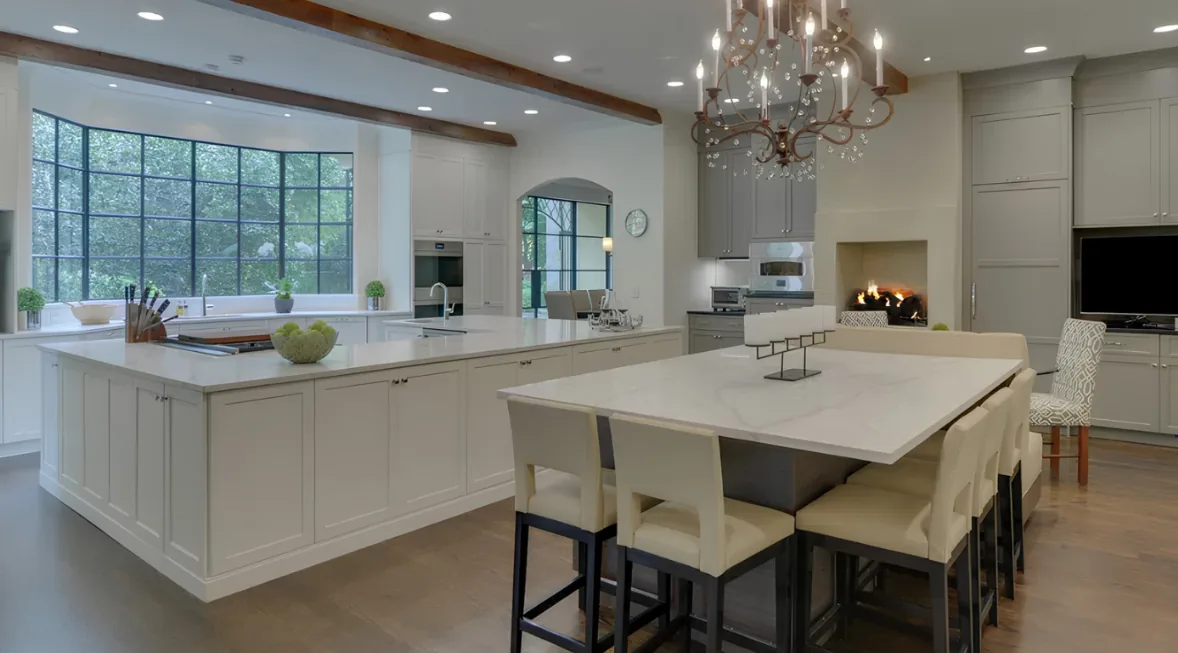
Choosing between Shaker, slab, and inset cabinet doors comes down to your preferred aesthetic, functionality, maintenance expectations, and overall design goals. Each style offers a distinct appearance and works well in different kitchen or bathroom settings. Understanding their construction and visual differences helps you select cabinetry that complements your space and lifestyle.
European Kitchen & BathWorks offers custom cabinets in Atlanta with tailored designs and quality craftsmanship for homeowners, designers, builders, and remodelers. Our showroom also features hardware, designer lighting, TOTO toilets, kitchen fixtures, and bath products to help coordinate every detail of your project. Contact us to discuss your ideas and find cabinetry and complementary products suited to your space.
Frequently Asked Questions
What is the main difference between Shaker, slab, and inset cabinet doors?
Shaker doors feature a five-piece design with a flat center panel surrounded by a square frame-they're a door profile. Slab doors are completely flat with no raised or recessed details-also a door profile. Inset describes how the door mounts: inset doors sit flush with the cabinet frame rather than overlapping it. Think of Shaker and slab as what the door looks like, and inset as how it's installed.
Which cabinet door style works best for traditional Atlanta homes?
Shaker and inset styles often suit traditional or historic Georgia architecture because their detail and proportions echo the millwork, moldings, and trim common in these homes. Adding crown moldings, paneled ends, and classic hardware like knobs or cup pulls enhances the traditional effect and helps the cabinetry feel like a natural extension of the home's character.
Can I mix Shaker, slab, and inset doors in the same kitchen?
Yes-mixing styles is a common and effective approach when done intentionally. For example, slab doors on an island paired with Shaker on perimeter cabinets creates contrast and material interest. Inset doors in a feature area like a bar or butler's pantry add a layer of craftsmanship without the investment of doing inset throughout the entire kitchen.
How do cabinet door styles affect hardware and finish choices?
Different door profiles pair naturally with different hardware. Slab doors look best with linear bar pulls, edge pulls, or push-to-open mechanisms that preserve their clean lines. Inset frames often call for classic knobs or bin pulls that complement the visible reveal. Shaker is the most flexible, pairing well with nearly any hardware style.
Do I need custom cabinetry to get Shaker, slab, or inset doors in my Georgia kitchen?
While these profiles appear across the market, custom cabinetry gives you the greatest control over proportions, materials, wood species, finishes, and construction quality. Custom work lets you specify frame widths on Shaker doors, choose veneer grain matching on slab fronts, or achieve the tight tolerances inset installation demands. Working with a showroom that guides both homeowners and trade professionals from initial design through installation support ensures every detail is executed exactly as planned.

Chris Brennan is the Owner and Founder of European Kitchen & BathWorks, a luxury kitchen and bath showroom serving the Atlanta area. Since founding the company in 2005, Chris has helped homeowners, architects, interior designers, builders, and remodelers select premium European and luxury kitchen, bath, lighting, and hardware products. With more than 20 years of industry experience, he shares practical insights on product selection, design trends, and creating functional, high-end living spaces through experience-based guidance.