
Kitchen Wall Lighting Ideas: Sconces, LEDs & More
Even the most beautifully designed Atlanta kitchen can feel flat and uninspiring when the lighting falls short. If your countertops disappear into shadow or your stunning backsplash goes unnoticed after sunset, the right kitchen wall lighting ideas-sconces, LEDs, and more-can transform the entire room overnight. Wall-mounted fixtures do what overhead lights alone simply cannot: they add depth, warmth, and dimension to every surface they touch.
This post walks through the most effective kitchen wall lighting ideas for Atlanta homeowners and design professionals. You'll find guidance on choosing the right sconces, integrating LED solutions for a sleek look, placing accent fixtures with purpose, and planning everything so your wall lighting works beautifully with your cabinetry, hardware, and plumbing. Whether you're building new or refreshing an existing kitchen, these ideas will help you create a space that feels intentional from every angle.
Key Takeaways
- Kitchen wall lighting goes far beyond decoration-it layers ambient, task, and accent light to eliminate shadows and bring your kitchen to life.
- Wall sconces act as jewelry for the kitchen while providing targeted light for zones like sinks, range walls, and coffee bars.
- LED strips and wall-mounted bars offer a sleek, energy-efficient solution that supports both modern and European-influenced kitchen aesthetics.
- You don't need a full renovation to upgrade-swapping sconces and adding LED accents can dramatically refresh any Atlanta kitchen.
- Visiting a local showroom lets you experience real finishes, working light displays, and expert guidance before making final selections.
Understanding Kitchen Wall Lighting: More Than Just a Pretty Fixture
Kitchen wall lighting includes a broader range of fixtures than most homeowners realize. Beyond traditional wall sconces, this category encompasses picture lights, LED strips mounted along walls or under cabinets, accent lighting inside glass-front cabinetry, linear wall-mounted LED bars, and decorative fixtures placed near windows or dining nooks. Effective wall lighting options include sconces and LED configurations that serve both practical and aesthetic purposes.
The foundation of great kitchen lighting rests on three layers. Ambient lighting provides the room's overall illumination-think recessed lighting or wall sconces that wash surfaces evenly. Understanding the right way to light a kitchen can help you balance ambient, task, and accent lighting for a more functional and inviting space.
Task lighting delivers focused illumination exactly where you work, such as continuous LED strips beneath upper cabinets or sconces flanking a sink. Accent lighting highlights what makes your kitchen special: a handmade tile backsplash, floating shelves, or the textures of natural stone.
In Atlanta's diverse kitchen layouts, wall lighting plays different roles. A galley kitchen with limited windows benefits enormously from sconces above counter runs to compensate for what ceiling fixtures miss. An open-concept kitchen with a large island needs wall fixtures along perimeter cabinets to balance brightness across the broader room, preventing the island from being over-lit while outer walls stay dim. Creative kitchen wall lighting combines functional task illumination with architectural flair, regardless of your layout.
How Wall Sconces, LEDs & Other Fixtures Work Together
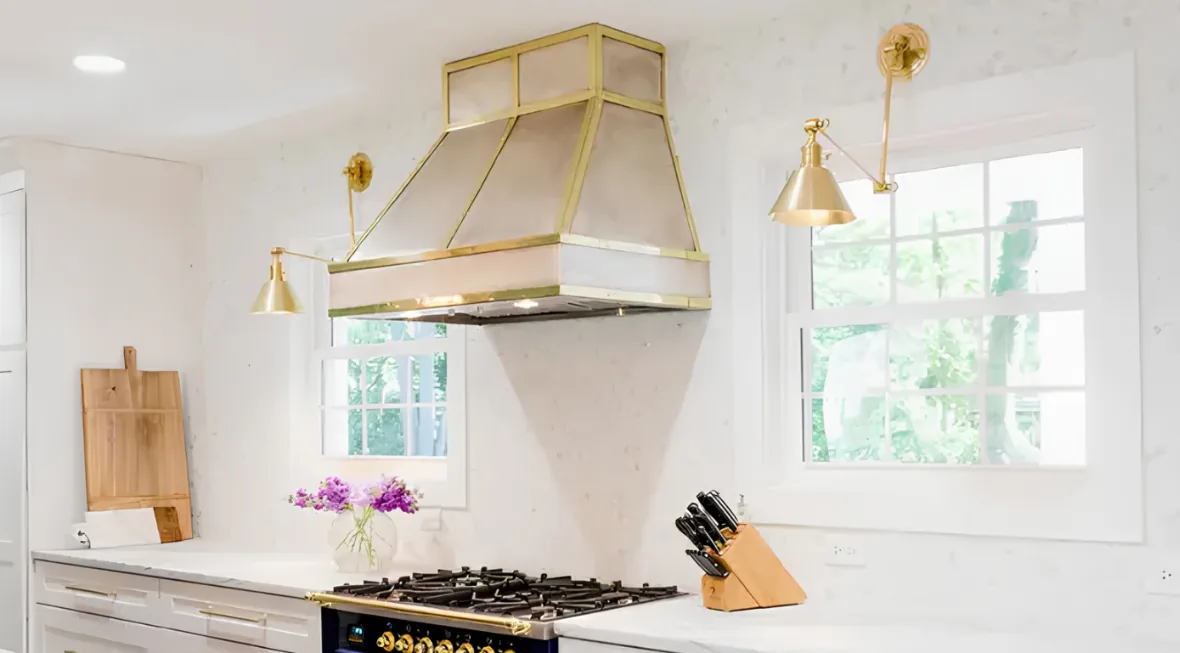
The real power of wall lighting emerges when different fixture types are layered intentionally. Picture a range wall in an Atlanta kitchen: a pair of sconces flanks the hood, casting warm accent light upward and outward. Beneath the upper cabinets on either side, continuous LED strips eliminate shadows across the countertop. Above, recessed lighting provides gentle ambient fill. A central island pendant completes the composition. Each layer handles a distinct job, and together they create depth that no single fixture type could achieve alone.
Coordinating finishes across these layers is essential to a cohesive look. When your sconces, LED channel profiles, and pendant share a finish family-say, warm brass or matte black-the kitchen reads as one unified composition rather than a collection of unrelated parts. Glass types matter too: clear shades add sparkle, frosted glass softens glare, and smoked or textured glass introduces mood. Keeping bulb color temperatures consistent across sconces, LED strips, and overhead fixtures prevents the visual dissonance that occurs when warm and cool tones compete in the same space.
Kitchen Wall Sconce Ideas: Style, Placement & Purpose
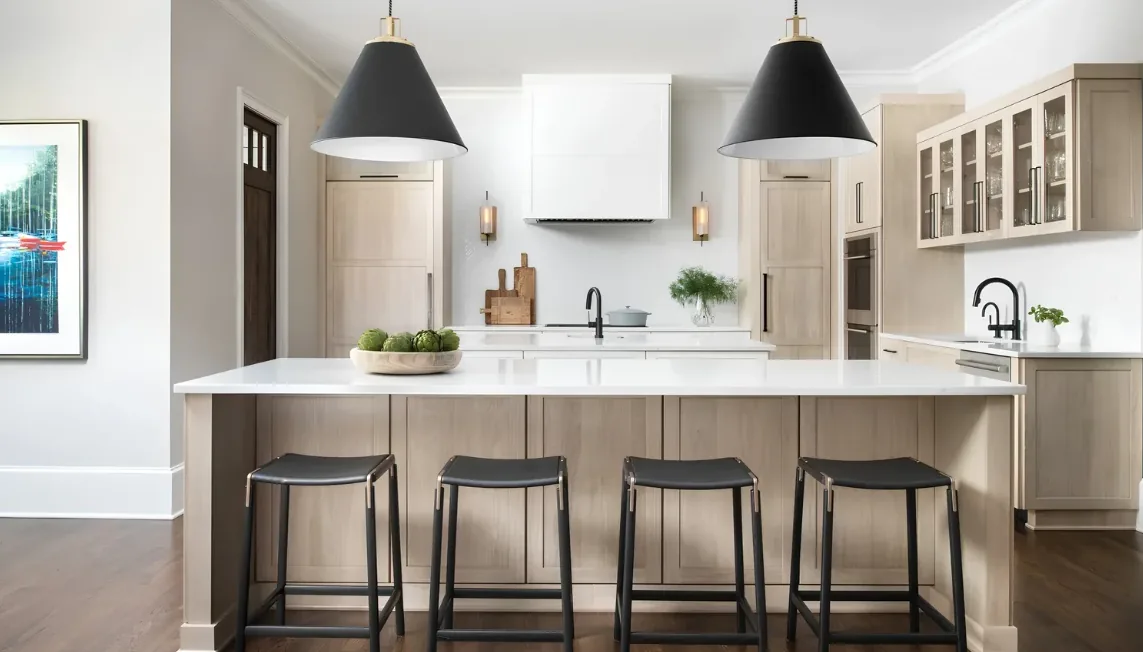
Wall sconces add character and focused light to specific kitchen zones, making them one of the most versatile tools in any lighting plan. Novelty wall sconces enhance kitchen atmosphere and personality, turning a blank wall into a design moment. They provide task lighting over sinks and ambient lighting for softer evening use-sometimes both at once.
Sconces work particularly well beside windows or open shelving, where they frame a focal point and draw the eye. Flanking a range hood with a matched pair creates symmetry and balance on what is often the kitchen's most prominent wall. Placing sconces beside a built-in hutch or along a coffee bar wall introduces a boutique, collected feel that overhead fixtures can't replicate.
Several sconce styles suit luxury Atlanta kitchens. Modern sconces feature clean lines and geometric shapes, pairing beautifully with flat-front slab cabinetry and contemporary finishes. Rustic sconces often use bronze or copper finishes, complementing warm wood tones and natural stone. Industrial sconces feature exposed bulbs and metal accents for a raw, architectural edge. Transitional designs blend modern geometry with classic curves, bridging traditional Southern architecture and updated interiors. Sculptural or statement sconces-with asymmetrical arms, oversized shades, or artistic metalwork-serve as a single focal point over a sink window or beside a niche.
Novelty wall sconces add personality to kitchen spaces in ways that overhead fixtures simply cannot. They can be hardwired, plug-in, or battery-operated, giving you flexibility depending on your existing wiring. Adjustable sconces allow for flexible light placement, letting you direct illumination precisely where it's needed.
Smart Sconce Placement & Height
Popular sconce placement zones in kitchens include over open shelving, beside upper cabinets, along a coffee bar or wine bar wall, and at a banquette or breakfast nook. Mount wall sconces between 60 and 72 inches from the floor to prevent glare, aligning the center of the fixture roughly at or slightly above eye level when standing. In kitchens with tall ceilings-common in many Atlanta homes-sconces can sit a bit higher while still reading as intentional.
Before ordering, try taping paper outlines on the wall to visualize scale and proportion relative to your cabinetry and backsplash. This simple mockup prevents costly surprises once the electrician has already roughed in junction boxes.
Swing-arm sconces feature adjustable arms for directing light precisely, making them ideal in areas with complex cabinetry or where you want the option to redirect illumination. Coordinate sconce locations with your cabinet design, electrical planning, and appliance placement during early design stages so that fixture arms don't interfere with cabinet doors or shelving.
LED Kitchen Wall Lighting: Sleek, Efficient & Customizable
LED technology provides energy efficiency and long lifespans, making it one of the most practical choices for kitchen wall lighting. LED strips installed under and above cabinets, puck lights inside glass-front cabinetry, and slim linear wall-mounted bars all contribute to a clean, European-influenced aesthetic that's increasingly popular in Georgia luxury homes.
Wall-mounted fixtures add both style and task illumination in kitchens, and LEDs excel at both. Their low heat output makes them safe near wood cabinets and delicate finishes. Their compact profiles allow for hidden installations-inside toe kicks, behind crown molding, or recessed into aluminum channels-so the light appears without a visible source. This supports the minimalist kitchen design philosophy many homeowners are drawn to.
Dimmable sconces and LED systems allow brightness adjustment for ambiance. Dimming capability is essential for kitchen lighting to change from bright task illumination during meal prep to a soft glow for evening gatherings. Tunable white LED strips take this further, letting you shift color temperature throughout the day-cooler for focused work, warmer for relaxed dining.
Key advantages of LED wall lighting include:
- Long-lasting performance with minimal maintenance over the life of the fixture
- Cool-running operation that won't damage surrounding materials
- Flexible color temperature options to match your kitchen's mood and finish palette
- Dimming compatibility for complete control over intensity
Accent Wall Lighting Ideas: Backsplashes, Coffee Bars & Dining Nooks
Accent wall lighting takes your kitchen from well-lit to truly memorable. It highlights the design features you've invested in and creates visual depth that makes the room feel more intentional.
Consider these idea sets for specific zones:
- Coffee or wine bar walls: Decorative sconces paired with under-shelf LED accents create a boutique café feel. The sconces provide a warm, inviting touch while LEDs showcase glassware and bottles.
- Full-height backsplashes: An LED wash running down a dramatic stone slab or artisan tile wall draws the eye and reveals the textures and movement in the material that overhead lighting alone would flatten.
- Breakfast nooks and built-in banquettes: A pair of shaded sconces on either side delivers softer light for morning coffee and a cozy glow for evening meals, differentiating this zone from the brighter prep and cooking areas.
The key is treating accent wall lighting as part of the overall kitchen design plan from the start, not as an afterthought layered on after cabinetry and finishes are already installed.
Coordinating Finishes & Materials
Selecting lighting finishes that complement your existing hardware, faucets, and appliance fronts is what separates a curated kitchen from a mismatched one. Warm brass sconces pair beautifully with natural stone and warm wood cabinets. Matte black fixtures align with white oak and contemporary palettes. Polished metal finishes echo glossy lacquer cabinetry.
Limit your kitchen to no more than two or three metal tones so the lighting doesn't clash with pulls, knobs, and plumbing fixtures. Glass shades interact differently with various wall materials: clear glass produces sparkle against glossy tile, frosted glass softens reflections on honed stone, and textured glass adds depth against plaster or painted walls.
Planning Kitchen Wall Lighting for Atlanta Remodels & New Builds
Thoughtful planning is the difference between lighting that merely works and lighting that elevates an entire kitchen. The ideal sequence begins early: define your zones (prep, cooking, cleanup, dining, display), decide which lighting layers each zone needs, align those decisions with your cabinetry and appliance layout, then refine fixture choices based on style and finish.
For Atlanta homeowners, visiting a local lighting showroom to see working displays of sconces, LED systems, and switches makes a significant difference. Seeing true finishes under real light-not just a photograph on a screen-helps you judge brightness, color temperature, and how light falls across materials like stone, wood, and metal.
Working with Designers & Installers
A showroom team that collaborates with interior designers, architects, and builders can review your plans, recommend fixture types suited to your layout, and coordinate finishes across lighting, plumbing, and hardware. Bring your cabinet drawings, backsplash samples, and appliance specifications to consultations for the most precise recommendations.
Early coordination with licensed electricians ensures that junction boxes, wiring paths, and driver locations end up exactly where your sconces and LED systems need them. This is especially important in remodels where existing wiring may not align with your new design vision. Planning this during the cabinetry design phase prevents costly rework later.
Creating a Signature Look: European-Inspired Kitchen Wall Lighting
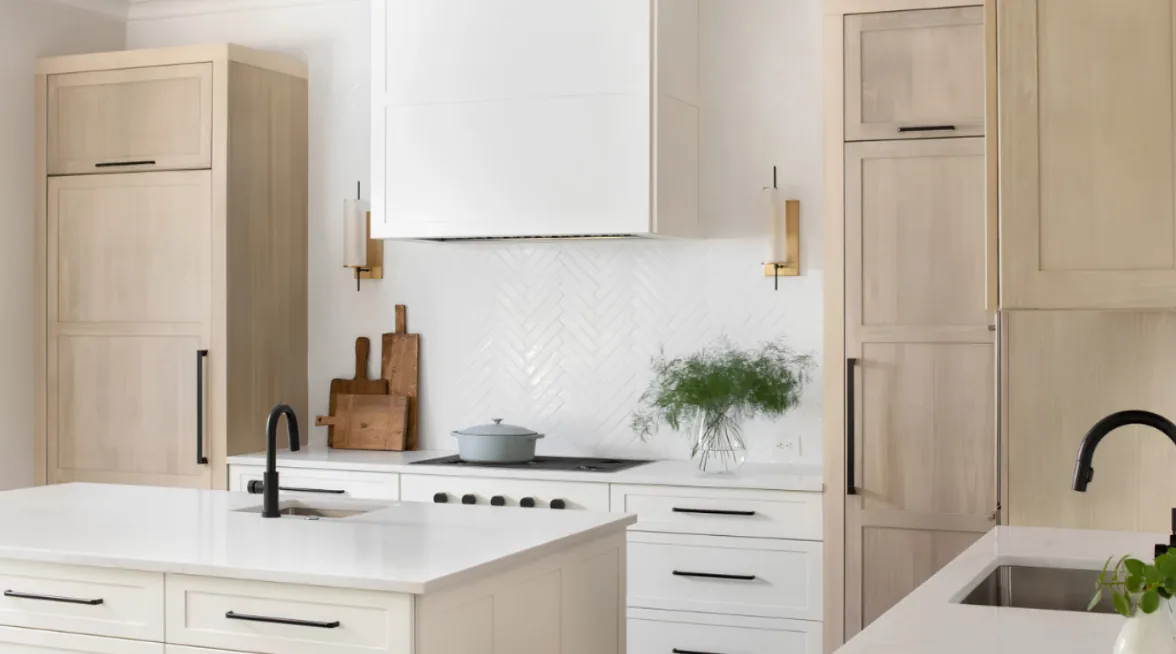
European-influenced design continues to shape how Atlanta kitchens approach wall lighting. The emphasis falls on restraint, quality, and intention: minimalist wall fixtures, slim LED lines, and one or two sculptural sconces rather than a clutter of decorative pieces.
Several signature looks are worth considering:
- A clean, linear LED wash across a stone backsplash paired with subtle brass sconces at intervals. This approach favors flush cabinetry, neutral tones, and warm metal accents that feel collected rather than designed.
- Symmetrical sconces framing tall, full-height cabinetry to create a gallery effect. This emphasizes vertical proportion and draws the eye upward, especially effective in homes with higher ceilings.
- Concealed LED lighting combined with one statement sconce as a focal point. Hidden toe-kick LEDs and above-cabinet cove lighting provide ambient fill, while a single bold fixture-perhaps over a coffee bar-anchors the wall with personality.
Think of kitchen wall lighting as part of the cabinetry and appliance composition, not separate from it. When you select fixtures, finishes, and materials together, the result feels effortlessly integrated. Explore curated lighting collections that align with this European-forward sensibility.
Layering with Decorative Plumbing & Hardware
Wall lighting can spotlight beautiful faucets, pot fillers, and sinks, turning functional plumbing into a design feature. A sconce mounted beside a window over a farmhouse sink draws attention to the fixture below and adds task light for cleanup.
Matching or intentionally contrasting lighting finishes with cabinet hardware creates a curated, high-end feel that reflects your personal taste. Arrange a cohesive materials board with samples of hardware, plumbing finishes, countertop, backsplash, and fixture options. Reviewing this board under real light in a showroom reveals combinations that photography alone cannot capture.
Create a Brighter and More Balanced Kitchen
Choosing the right kitchen wall lighting can improve visibility, highlight design details, and create a more inviting atmosphere throughout the space. Sconces, LED fixtures, and layered lighting each serve different purposes, making thoughtful placement essential. Balancing task, accent, and ambient lighting helps create a kitchen that feels functional, comfortable, and visually cohesive.
European Kitchen & BathWorks offers kitchen light fixtures in Atlanta for homeowners, designers, builders, and remodelers seeking thoughtfully selected lighting options. Our showroom also features custom cabinetry, premium hardware, TOTO toilets, kitchen fixtures, and bath products for coordinated spaces. Contact us to compare lighting styles and complete your kitchen with fixtures that support both function and design.
Frequently Asked Questions
How do I choose the right kitchen wall sconces for my Atlanta home?
Start by matching the sconce style to your cabinetry-modern sconces with clean lines suit slab-front cabinets, while classic or rustic designs complement shaker-style doors. Coordinate the fixture finish with your existing hardware and faucets for a cohesive look. Consider the scale of the wall where the sconce will live, and whether you need task illumination, ambient glow, or accent light in that spot.
Where should I place sconces in my kitchen for the best effect?
The most popular placements include flanking a range hood, beside or over a sink window, highlighting a coffee bar or wine niche, and framing open shelving or a built-in hutch. Align sconces with the height of your backsplash and wall cabinets so they feel proportional to the surrounding architecture. Planning placement during the cabinetry design phase ensures electrical rough-in lands exactly where you need it.
What color temperature of LED lighting works best in a kitchen?
For cozy, inviting spaces and evening ambiance, a warmer white tone creates the most comfortable atmosphere. For task-heavy prep and cooking areas, a balanced neutral white delivers better clarity and color accuracy. The most important rule is consistency: keep all fixtures-sconces, LED strips, and overhead lights-in the same general tone so the kitchen feels unified.
Can I update my kitchen wall lighting without a full remodel?
Absolutely. Swapping outdated sconces for modern or transitional designs, adding wall-mounted LED accents, and upgrading under-cabinet lighting are all impactful changes that leave your existing cabinets and appliances in place. These updates can dramatically refresh the look and feel of your kitchen with minimal disruption, making them an excellent first step for homeowners who aren't ready for a full renovation.
Do I need a showroom visit to choose kitchen wall lighting, or can I order online?
While online shopping offers convenience, a showroom visit lets you see true finishes and light color in person, view working displays that show how fixtures perform on real surfaces, and get expert guidance on compatibility with your plumbing, cabinetry, and appliances. You can resolve questions about scale, brightness, and finish coordination before committing-saving time, returns, and costly installation mistakes.

Chris Brennan is the Owner and Founder of European Kitchen & BathWorks, a luxury kitchen and bath showroom serving the Atlanta area. Since founding the company in 2005, Chris has helped homeowners, architects, interior designers, builders, and remodelers select premium European and luxury kitchen, bath, lighting, and hardware products. With more than 20 years of industry experience, he shares practical insights on product selection, design trends, and creating functional, high-end living spaces through experience-based guidance.