
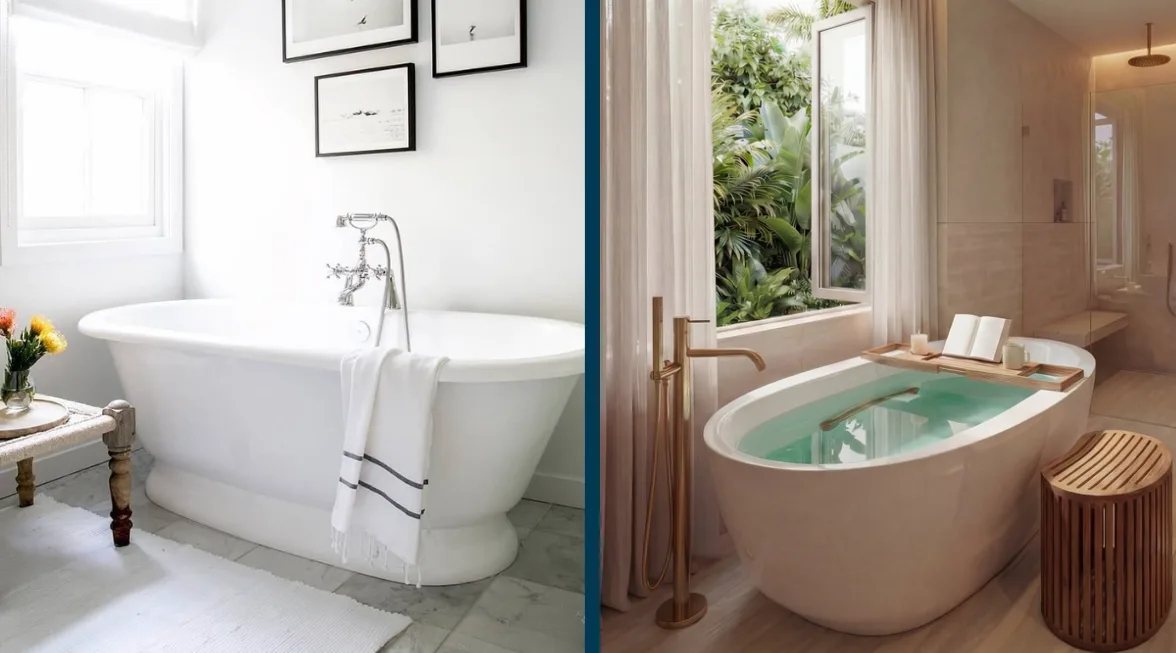
Deck Mounted vs Freestanding Tub Fillers: Key Differences Explained
Selecting a tub filler for your luxury bathroom renovation is one of those decisions that shapes everything-from the visual atmosphere of the room to the daily experience of drawing a bath. The two primary options, deck-mounted and freestanding tub fillers, each bring distinct advantages in aesthetics, installation, and long-term functionality. Understanding the key differences between them helps you avoid costly mistakes and ensures your bathtub setup matches both your design vision and your home's plumbing infrastructure.
Deck-mounted fillers attach directly to a tub rim or surrounding platform, pairing naturally with built-in and drop-in tubs. Freestanding tub fillers, by contrast, rise from the floor beside a free standing tub, creating a dramatic centerpiece in open bathroom layouts. Both styles come in a wide range of finishes-from polished chrome to matte black and gold-but they differ significantly in installation complexity, cost, and maintenance access.
Key Takeaways
- Deck-mounted fillers install on tub rims or platforms, while freestanding fillers rise independently from the floor beside the bathtub.
- Installation complexity is generally lower for deck mount faucets, with less labor and fewer structural modifications required.
- Freestanding tub fillers deliver a bold visual statement and suit modern spa-inspired layouts, while deck-mounted options provide clean lines and a streamlined look.
- Cost considerations extend beyond the fixture price.
- Maintenance accessibility favors deck-mounted configurations, where valves and connections typically remain reachable beneath the deck or through access panels.
Understanding Deck Mounted Tub Fillers
Deck-mounted tub fillers are fixtures that install directly on the bathtub rim or a surrounding platform, with the spout and controls emerging through pre-drilled holes in the deck surface. They are most compatible with drop-in, alcove, and built-in tubs that feature adequate ledge or deck space for mounting.
Deck-mounted tub fillers are suitable for built-in and drop-in tubs, and they create a clean, streamlined appearance that integrates naturally with the tub's profile. The faucet, handles, and optional hand shower sit flush with the rim, saving floor space and keeping the surrounding bathroom layout uncluttered. This is especially valuable in smaller bathrooms where a floor-mounted fixture could disrupt movement or crowd the space.
From a plumbing perspective, supply lines route beneath the deck through the substructure or cabinetry, with standard ½-inch inlets feeding the fixture. Deck-mounted faucets are compatible with various tub types and come in 1-hole, 3-hole, and 5-hole configurations depending on the setup-spout only, spout with handles, or a full Roman set with integrated hand shower and diverter. Deck-mounted tub fillers save floor space and simplify plumbing, and they minimize plumbing leaks by dripping directly into the basin rather than onto exterior surfaces.
Installation Benefits and Considerations
Deck-mounted fillers are typically easier and cheaper to install than their floor counterparts. The installation complexity of deck-mounted fillers is usually lower because plumbing is often already routed in or near the deck or wall, requiring no slab work or floor reinforcement. Deck-mounted faucets are easier to install than floor-mounted options in most renovation scenarios, and labor costs reflect that simplicity.
They allow for accessible plumbing for easier maintenance-valves and diverters typically live beneath the deck or behind access panels, so servicing them doesn't require invasive work. Future repairs can be handled without disrupting tile, flooring, or structural elements.
However, several considerations play a role in successful installation. Deck thickness must be sufficient to support the fixture weight and the forces generated by water flow. Pre-drilling requirements vary by configuration, and the deck material-whether stone, tile, or solid surface-must be strong enough that drill holes don't weaken the structure. Deck-mounted fillers limit tub choices and require drilling holes, which means the tub or deck design must accommodate the fixture footprint from the outset.
Waterproofing and sealing around each mounting point is critical, reinforcing tips on choosing the right plumbing fixtures for long-term performance. Improper sealing can lead to water accumulation around the faucet base, which over time can damage the deck substrate, cabinetry below, or structural framing. Stone-compatible sealant and recessed mounting techniques help protect against moisture infiltration.
Exploring Freestanding (Floor Mounted) Tub Fillers
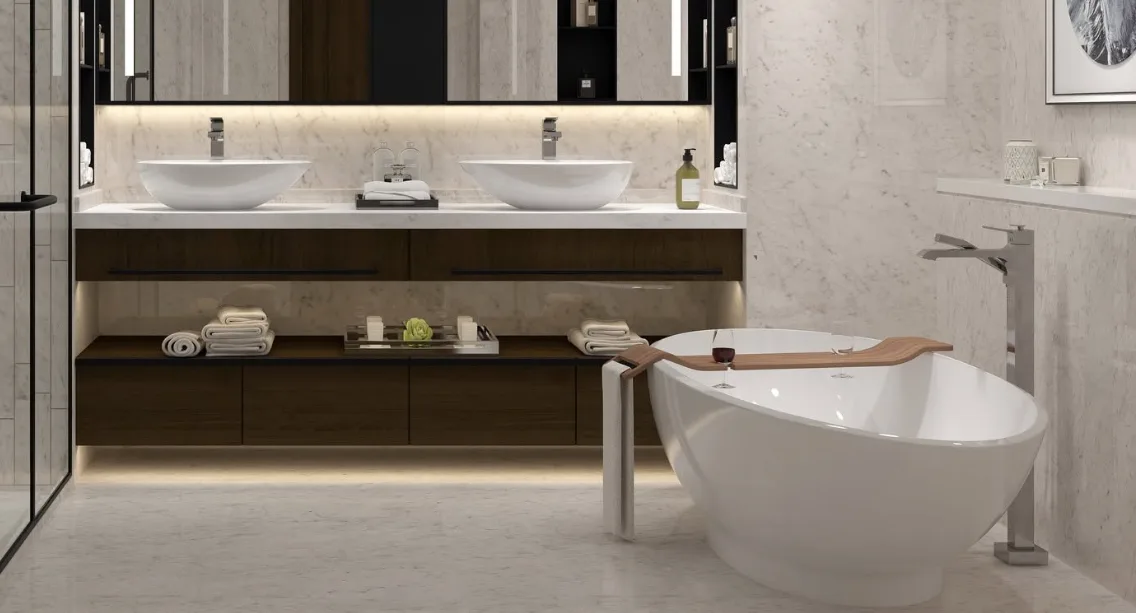
Freestanding tub fillers are floor-mounted fixtures that rise independently from the floor beside the tub, standing as both a design feature and plumbing fixture. Floor-mounted fillers rise independently from the floor beside the tub, and they are specifically designed for freestanding bathtubs without rims-soaking tubs, clawfoot models, and stone resin vessels that sit away from walls.
Freestanding tub fillers offer a dramatic focal point and flexible layout options, making them a natural fit for spa-inspired bathroom designs. They serve as sculptural elements visible from every angle, contributing to the "floating sanctuary" aesthetic that defines many modern luxury bath spaces. Freestanding fillers allow the tub to be positioned away from walls, giving designers maximum freedom to create island-style configurations. Freestanding tub fillers are often considered a luxury aesthetic choice, and floor-mounted faucets are often associated with luxury bathroom designs for this reason.
The plumbing requirements for a freestanding tub filler are more substantial. Supply lines must be routed through the floor, with rough-in work completed before finish flooring or slab is poured. Freestanding tub fillers require more extensive plumbing work. According to Brizo's specifications, their freestanding filler rough allows a maximum floor thickness of 3-3/4 inches and delivers flow rates up to 14.5 GPM at 60 psi-numbers that must align with local code requirements.
Freestanding tub fillers complement standalone or clawfoot tubs and can include features like hand showers, diverters, and thermostatic controls. Popular styles include single-handle, dual-handle, and thermostatic floor fillers in finishes ranging from chrome and brushed nickel to polished brass and oil-rubbed bronze. They provide maximum flexibility in placement around the tub, though that flexibility demands careful planning. Weight is a serious factor: an acrylic freestanding tub weighs around 70 lbs empty but 400–500 lbs when full, and cast iron or stone resin models are heavier still.
Key Differences and Comparison
The choice between tub fillers impacts the bathroom's usability, aesthetics, and budget in several measurable ways. Here's how the two styles compare across the factors that matter most:
Installation Complexity and Cost
Deck-mounted faucets are generally more cost-effective than floor-mounted ones. Fixture prices for deck mount faucets range from approximately $100–$1,000, while freestanding tub filler fixtures range from $150–$2,200+ depending on brand, configuration, and finish. ALFI's deck-mounted fillers with hand showers fall in the $570–$970 MSRP range, while premium freestanding models from brands like Brizo and Newport Brass run higher. Labor costs diverge further: deck-mounted faucets are easier to install than floor-mounted ones, and all-in freestanding installations-including plumbing and alignment work-can reach $3,000 or more.
Aesthetic and Design Flexibility
Deck-mounted fillers integrate with built-in and drop-in tub designs, keeping the tub edge clean and the overall look streamlined. They suit classic and transitional bathroom styles where hardware blends into the setting rather than commanding attention. Freestanding tub fillers, by contrast, work as a centerpiece-a sculptural element displayed alongside the freestanding tub. Floor-mounted faucets provide maximum placement flexibility around the tub, allowing designers to position the filler wherever it serves the layout best. The style difference is fundamental: integrated restraint versus bold individuality.
Functionality
Water flow performance is comparable in high-end models of both types, though some freestanding fillers offer higher GPM ratings that match faster fill times with larger soaking tubs. Temperature control varies by configuration-many freestanding models include thermostatic valves or single-lever mixers, while deck-mounted Roman sets commonly feature diverters with an integrated hand shower. Spout reach and projection are critical in both styles but particularly consequential for freestanding fillers, where misalignment causes splashing.
Maintenance and Long-Term Access
Deck-mounted configurations win on accessibility. Valves and connections are typically reachable through cabinetry or under the deck, making routine maintenance straightforward. Freestanding filler plumbing tends to be internal and less accessible, with components buried beneath finished flooring; failures may require more invasive work to diagnose and repair.
Finish Options and Customization
Both styles come in broad finish families-chrome, brushed nickel, matte black, oil-rubbed bronze, polished brass, and premium PVD coatings that resist tarnish. Luxury finishes can carry a 20–40% price premium over standard chrome. Deck-mounted sets offer more configuration options (1, 3, or 5-hole setups), while freestanding models, though fewer in total options, deliver more visual impact because every surface of the fixture is displayed from multiple angles. Browse high-end plumbing fixtures to see the range of finishes and configurations available from brands we carry.
Space and Layout
Freestanding fillers require clearance around the tub for cleaning and potential floor access panels. Deck-mounted fillers require adequate rim or platform width but keep the floor clear. In tighter bathroom layouts, a deck-mounted faucet keeps the room feeling open; in larger, open-plan bath spaces, a floor-mounted tub filler adds depth and visual interest to the layout.
Create a Bathroom That Reflects Your Style
Choosing between a deck-mounted and freestanding tub filler depends on your bathroom layout, design preferences, and installation requirements. Both options offer unique advantages, and selecting the right fixture enhances comfort, functionality, and visual appeal. Thoughtful planning ensures your bathtub becomes a luxurious centerpiece that complements your overall bathroom design.
European Kitchen & BathWorks offers premium freestanding tub faucets in Atlanta to help homeowners create elegant and functional bathroom spaces. We also provide exceptional cabinetry, hardware, lighting, and TOTO products to complete a beautifully coordinated interior. Let us help you find the perfect fixtures and finishes with expert guidance and premium products tailored to your vision.
Frequently Asked Questions
Can I install a freestanding tub filler with any type of bathtub?
Not every tub suits a freestanding tub filler. Floor-mounted fillers are specifically designed for freestanding bathtubs without rims-soaking tubs, clawfoot tubs, and standalone vessels. If your tub is a drop-in or alcove model built into a deck or wall, a deck mount faucet is typically the appropriate choice. The tub must also have adequate clearance beside it for the filler to be positioned correctly.
How do I determine the correct height and reach for a freestanding tub filler?
Start with the spec sheets from your tub manufacturer, then measure from the finished floor height to the tub rim. The filler spout should extend over the rim by several inches to fill the basin cleanly without excessive splashing. Check the filler's maximum floor thickness rating (Brizo's R70100, for example, accommodates floors up to 3-3/4 inches) and ensure the overall filler height allows comfortable use of any integrated hand shower.
Are deck-mounted tub fillers compatible with overflow drains and built-in features?
Yes. Deck-mounted faucets are compatible with drop-in and alcove tubs that include overflow drains, integrated armrests, and other built-in features. The drain and overflow operate independently from the filler, and Roman-style deck sets can accommodate diverters and hand showers within the same deck configuration.
Which mounting style works best for bathroom renovations versus new construction?
Deck-mounted fillers are often the more practical choice for renovations, since plumbing is already routed in or near walls and the deck. New construction offers greater flexibility for freestanding tub fillers because floor reinforcement can be planned from the start, before slab or finish flooring is installed. Retrofitting a floor-mounted tub filler into an existing bathroom is possible but typically more disruptive and expensive.
What finish options are available for both deck mounted and freestanding models?
Both styles are available in standard finishes like polished chrome and brushed nickel, as well as premium options including matte black, oil-rubbed bronze, polished brass, gold, and advanced PVD coatings that resist tarnishing and fingerprints. Luxury finishes typically carry a 20–40% price premium over standard chrome.

Chris Brennan is the Owner and Founder of European Kitchen & BathWorks, a luxury kitchen and bath showroom serving the Atlanta area. Since founding the company in 2005, Chris has helped homeowners, architects, interior designers, builders, and remodelers select premium European and luxury kitchen, bath, lighting, and hardware products. With more than 20 years of industry experience, he shares practical insights on product selection, design trends, and creating functional, high-end living spaces through experience-based guidance.